Are you seeing headlines calling Evans “balanced” and wondering what that actually means for your River Island home? If you are thinking about buying or selling, labels like buyer’s or seller’s market can feel vague. You deserve a clear, plain-English way to read the numbers and set expectations with confidence. In this guide, you’ll learn the key metrics, how to check River Island’s trend, and what to expect at the negotiating table. Let’s dive in.
What a balanced market really means
In real estate, balance describes a market where neither buyers nor sellers have outsized leverage. A practical rule of thumb many agents use is 4-6 months of inventory as balanced. The National Association of Realtors often cites about 6 months of supply as a classic benchmark for balance. In balanced conditions, sale prices tend to land near list price, and days on market sit in a moderate range.
A balanced market does not guarantee quick sales or full-price offers on every listing. It means overall conditions are steady, with results shaped by price band, condition, and presentation.
The three numbers to watch in River Island
Months of inventory (MOI)
MOI estimates how long it would take to sell the current active listings at the recent sales pace. Formula: MOI = Active listings ÷ Average monthly closed sales. Many local practitioners read 4-6 months as balanced. Less than 4 months favors sellers; more than 6 months favors buyers. MOI can swing by price point and season, so check your specific range and the time window used.
List-to-sale price ratio
This ratio shows how close sale prices are to list prices. Formula: List-to-sale ratio (%) = Median sale price ÷ Median list price × 100. Around 100% suggests sellers are getting close to list. Above 100% points to stronger seller conditions. Below roughly 98-99% signals buyers are negotiating prices down.
Days on market and extra clues
Days on market tracks how long listings take to go under contract. Shorter time often means stronger demand. Pair DOM with MOI and the list-to-sale ratio for a fuller view. You can also watch price reductions, the share of pendings versus actives, and whether deals include buyer credits or inspection concessions.
How to check River Island’s numbers
You can get reliable neighborhood data by asking a local agent for a custom report using the MLS search boundary for the River Island subdivision. Here is a simple plan:
- Define the neighborhood precisely in the MLS so nearby communities do not skew counts.
- Pull active listings, closed sales for the last 3 months, and the median list and sale prices in that same window.
- Calculate the metrics:
- MOI = Active listings ÷ Average monthly closed sales over 3 months.
- List-to-sale ratio = Median sale price ÷ Median list price × 100.
- Compare results to the common thresholds and note any seasonal context.
Example only (illustration, not current data)
- Active listings: 12; Closings last 3 months: 9, so average monthly sales: 3.
- Median list: $520,000; Median sale: $510,000.
- MOI = 12 ÷ 3 = 4 months. List-to-sale ratio = 510,000 ÷ 520,000 × 100 ≈ 98.1%.
- Interpretation: roughly balanced with modest buyer leverage on price; sellers should expect some negotiation, and buyers should be ready to act on well-priced homes.
What balance means for River Island buyers
In a balanced market, you typically get reasonable time to shop and modest room to negotiate.
- Typical outcomes
- Multiple offers can still happen on standout homes, but many sales follow one clean negotiation round.
- Sellers may provide small concessions when needed, like minor repairs or limited closing cost help.
- Timelines are moderate; you usually have weeks, not days, but strong listings still move quickly.
- Smart buyer strategies
- Ask for MOI and list-to-sale ratio in your exact price band before you write.
- Get pre-approved so you can move quickly on well-priced homes without overpaying.
- Keep inspection contingencies, but expect to negotiate credits rather than full repairs on every item.
What balance means for River Island sellers
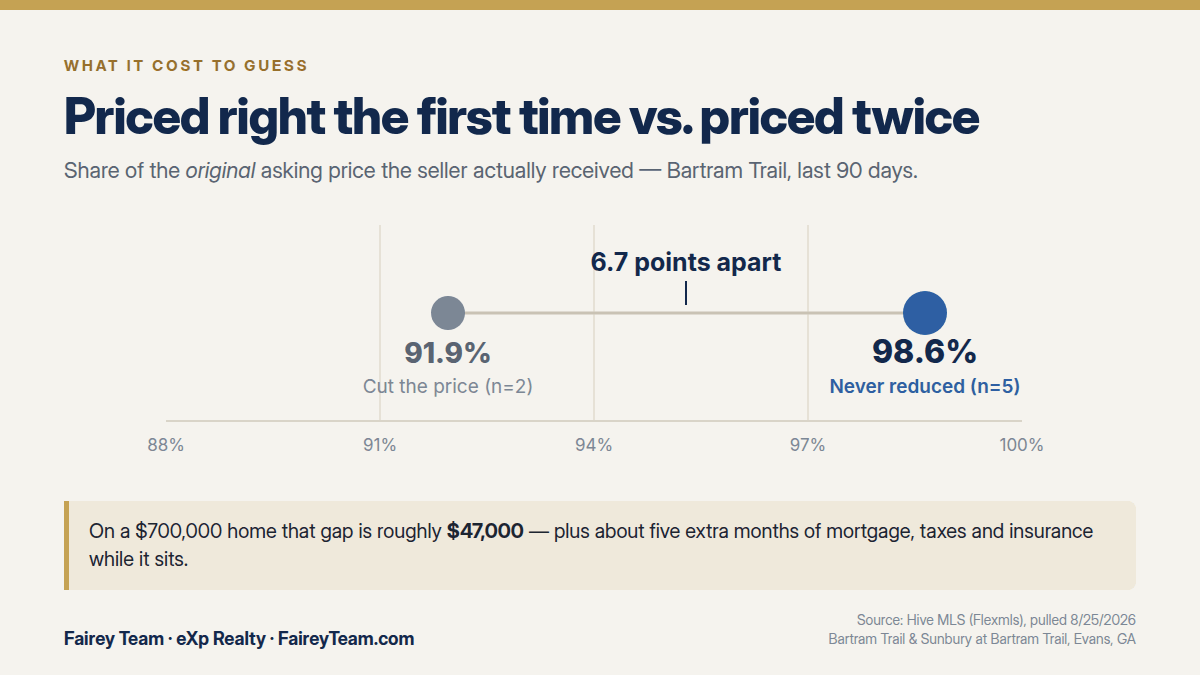
In balanced conditions, pricing and presentation drive results. Overpricing by even 2-5% can push days on market up and reduce your final proceeds.
- Typical outcomes
- Expect steady showings and offers within a few weeks if you price accurately and present well.
- Buyers may ask for repair credits or closing cost help; you still have room to defend price if the home shows its value.
- Smart seller strategies
- Price competitively to meet the active buyer pool in your band.
- Invest in staging and strong marketing to stand out; quality presentation often decides who gets the first, best offer.
- Consider small, targeted concessions or flexible timing before cutting price.
Local factors that can tilt conditions
- Price bands: River Island can be balanced overall while homes under one price threshold move faster and upper ranges move slower. Always check by band.
- New construction: Nearby new builds can swell inventory at certain price points. Some buyers prefer established lots and landscaping, so resale and new homes may not compete evenly.
- Small-sample noise: A few sales can swing neighborhood stats. Use 3-12 month windows and focus on trends.
- Seasonality: Spring often lowers MOI; late fall and winter can lift it. Mortgage rate moves can shift urgency quickly.
- Property features: HOA amenities and waterfront views can keep select homes resilient even when the broader market cools.
A simple monthly monitoring plan
- What to track
- MOI for River Island on a 3-month and 12-month lookback.
- Median list vs median sale price for the last 3 months and the resulting list-to-sale ratio.
- Median days on market for recent sales.
- Share of active listings with recent price reductions.
- Inventory by price band, plus new listings vs new pendings over the last 30 days.
- How often to update
- Monthly is ideal. Use 3-month rolling averages to smooth out small-sample swings.
- Where to source
- Local MLS data for the most accurate neighborhood counts.
- NAR for the months-of-supply benchmark and definitions.
- County property records for parcel context; public aggregators for quick cross-checks.
Ready to plan your move?
If you want a clear read on River Island’s numbers and a plan tailored to your timeline, reach out. With award-winning staging and marketing, plus a data-first pricing process, you can position your home to sell efficiently and maximize proceeds while creating local impact. Connect with The Fairey Team for a free home marketing plan — sell smarter and give back.
FAQs
What does “months of inventory” mean in Evans?
- It estimates how long current listings would take to sell at the recent sales pace, with about 6 months often cited as balanced and 4-6 months used by many local agents.
How does a balanced market affect River Island home prices?
- Prices tend to land near list on average, with modest concessions rather than large discounts or bidding wars.
What is a good list-to-sale ratio for balance in Evans?
- Around 100% signals balance; above 100% leans seller-favorable, while below roughly 98-99% shows buyers are negotiating down.
How fast do balanced-market homes sell in River Island?
- Many sell within a few weeks when priced and presented well, though standout listings can still move faster.
How can I get River Island-specific stats right now?
- Ask a local agent for an MLS report using the River Island boundary with 3-12 month windows, broken out by price band.